
AI Search Optimization For Web3 A Complete Guide
Master AI search optimization for Web3. This guide offers a proven playbook to optimize for AI answers, drive qualified traffic, and achieve measurable growth.



Welcome to the new era of search. If you think ranking on Google is the whole picture, you're already behind. This is the new frontier: AI search optimization for Web3, a non-negotiable strategy for any project that wants to stay visible and drive revenue.
It’s no longer enough to be findable. You must be citable by AI.
The New Search Frontier For Web3
The rules of discovery have been completely rewritten. For years, the game was simple: get to the top of Google. That playbook is now obsolete. With over 50% of search queries now ending in zero-click answers, the goalposts haven't just moved—they're on a different field entirely.
AI platforms like ChatGPT, Perplexity, and Google's AI Overviews are the new gatekeepers of information. For many users, they are the only discovery channel.
Think of traditional search as a massive library where you have to find, pull, and read every book yourself. AI search is like having a hyper-competent librarian who has already read everything and just gives you the synthesized answer. If that librarian has never heard of your project or can't verify its details, you simply don't exist.

This is the core challenge for Web3 organizations. You risk becoming invisible to the very AI curators that now guide user decisions. We've seen this play out already with the Web3 brand visibility problem, where AIs default to recommending only the largest, most established players.
From SEO to AI Search Optimization (AEO)
This is where AI Search Optimization (AEO) comes in. AEO isn't about gaming an algorithm with keywords. It’s about deliberately structuring your project's data and narrative so that AI models can understand, trust, and confidently cite you as an authority.
It’s the difference between being a random book on a dusty library shelf and being the expert the librarian quotes by name.
To make it tangible, let's look at the critical differences between the old way and the new.
Traditional SEO vs AI Search Optimization (AEO) for Web3
| Aspect | Traditional SEO | AI Search Optimization (AEO) |
|---|---|---|
| Primary Goal | Rank #1 on Google's list of links. | Become a citable, trusted source within AI-generated answers. |
| Focus | Keywords, backlinks, domain authority. | Entities, structured data, expert consensus, factual accuracy. |
| Content Strategy | High-volume, keyword-driven blog posts. | High-intent, data-rich content (comparisons, case studies, technical docs). |
| Success Metric | Organic traffic, rankings, click-through rate. | AI citations, AI-sourced clicks, brand mentions in AI answers. |
| Technical Layer | On-page optimization, site speed, mobile-friendliness. | Schema markup, knowledge graphs, LLM readiness audits. |
The takeaway is clear: the skills and strategies that won the Google game are not enough to win the AI game. It requires a fundamental shift in how you build and present information.
This isn't just theory. The impact is measurable. Structured data implementation has led to a 300% higher accuracy in how large language models answer queries about decentralized technologies. In one case, a client saw 560% growth in AI clicks in just 60 days by deploying targeted AEO tactics.
The Playbook For Web3 Leaders
The Web3 space moves fast, and AI is accelerating how information is discovered and validated. We're already seeing platforms like CoinStats AI integrate advanced intelligence to give users deeper insights, proving the practical demand for AI in crypto.
The mission for Web3 leaders is clear: you must build a system that makes your project, your team, and your technology understood, trusted, and recommended by AI.
This guide is your playbook to do exactly that. We’ll move from concept to execution, giving you the strategies to architect your content, define your authority, and measure what matters in this new AI-driven landscape. It’s time to secure your visibility and win the new era of search.
Overcoming Web3's Unique Search Obstacles
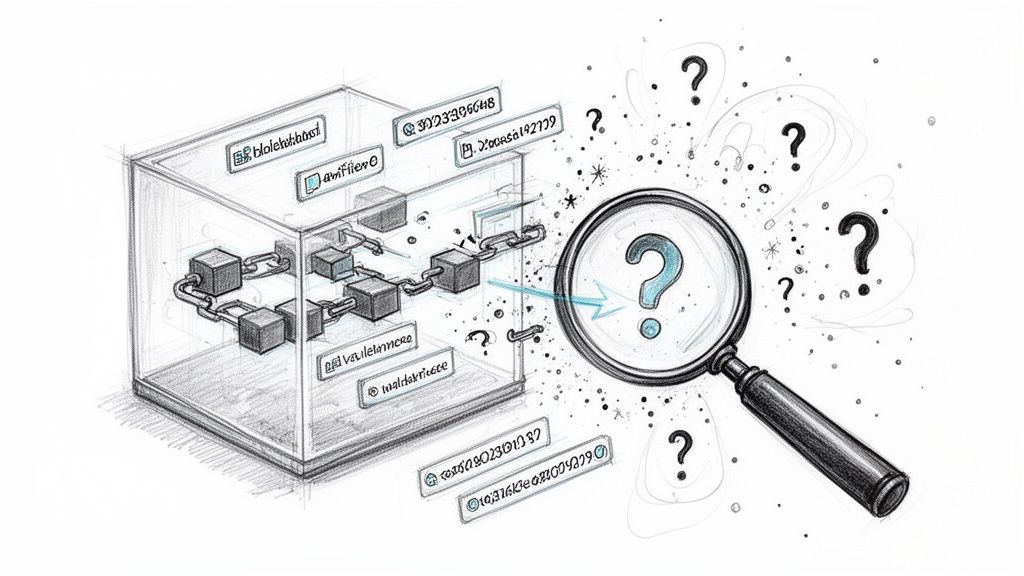
You can't just slap a traditional SEO playbook on a Web3 project and expect AI search engines to pay attention. It doesn't work. The decentralized world runs on a completely different set of rules, and AI models trained on Web2 are wired to see it as chaotic and untrustworthy.
Think of it this way: AIs like ChatGPT and Perplexity learned to trust predictable signals—centralized domains, clear corporate entities, and verifiable leadership. Web3 breaks every single one of those conventions. Before an AI will ever cite your protocol or dApp, you have to overcome the fundamental obstacles that make it look like a risky bet.
The Black Box of Decentralization
Decentralization is the first massive wall you hit. To an AI, a project built on-chain is like a company with no headquarters, no public CEO, and financial records written in code it can't read. Your most important information isn't on an "About Us" page; it's buried in smart contracts, on-chain transactions, and obscure governance proposals.
An AI crawler can’t just pull your Total Value Locked (TVL) from a block explorer. It can't parse your tokenomics from a smart contract. That data needs to be translated into a structured, human-readable format the AI can actually understand and verify.
Until you do that translation work, your project is a complete black box. And AI engines will not recommend what they can't understand.
This forces AI models to rely almost entirely on what third parties say about your project. If you aren't clearly explaining your on-chain activity on your own site, you’re letting others control your narrative—or worse, leaving the AI with nothing to go on.
We break down more of these issues in our guide on why normal SEO fails for blockchain projects. Understanding this context is non-negotiable for building an AEO strategy that actually works.
The Fluidity of Digital Identity
In the old world of Web2, authority is tied to stable, verifiable identities. We trust articles from known authors, whitepapers from established companies, and analysis from named executives. In Web3, identity is pseudonymous, built around wallet addresses and decentralized identifiers (DIDs).
While great for user privacy, this creates a massive headache for an AI trying to figure out who is an expert and who isn't.
An AI builds credibility by connecting the dots between entities. Who are the developers behind this protocol? What’s their track record? When your key contributors are known only by ENS names or wallet addresses, the AI’s knowledge graph breaks down. It has no reliable way to tell if "0x123..." is a world-class developer or an anonymous scammer.
Without stable identities to attribute expertise to, AIs struggle to assign authority—a critical signal they use to decide which sources to trust and cite.
The Signal in the Noise
Let’s be honest: the Web3 ecosystem is notoriously volatile and full of noise. This makes it incredibly hard for an AI to tell the difference between a legitimate, high-value DeFi protocol and the latest meme coin about to get rug-pulled.
This isn't just a theoretical problem. In Q2 2022 alone, the Web3 space lost $718.34 million to 48 major attacks. Events like these train AI models to be extremely cautious. To avoid recommending a risky or fraudulent asset, they default to citing only the most established, widely-recognized entities.
Your job is to cut through that noise and become a clear, trustworthy signal. This means relentlessly generating verifiable information and securing citations on high-authority platforms that AI models already trust.
Without that deliberate effort, even the most groundbreaking project will get lost in the static, dismissed by AI as just another unverified token.
The AEO Playbook For Web3 Authority
Tackling the search visibility problems in Web3 isn't about finding a few quick hacks. It demands a deliberate, structured plan. This is your playbook for establishing authority with AI systems—a set of tactical steps to turn your project from an unknown concept into a citable, trusted entity. This isn't about short-term wins; it's about engineering a durable system for AI visibility.
The process flows from foundational architecture to sophisticated content strategy, all designed to ensure AI models can find, understand, and ultimately trust your project. Think of it like building a house: you pour a solid foundation and frame the structure long before you ever think about painting the walls.
This playbook is broken down into three core stages: Architect, Define, and Create.
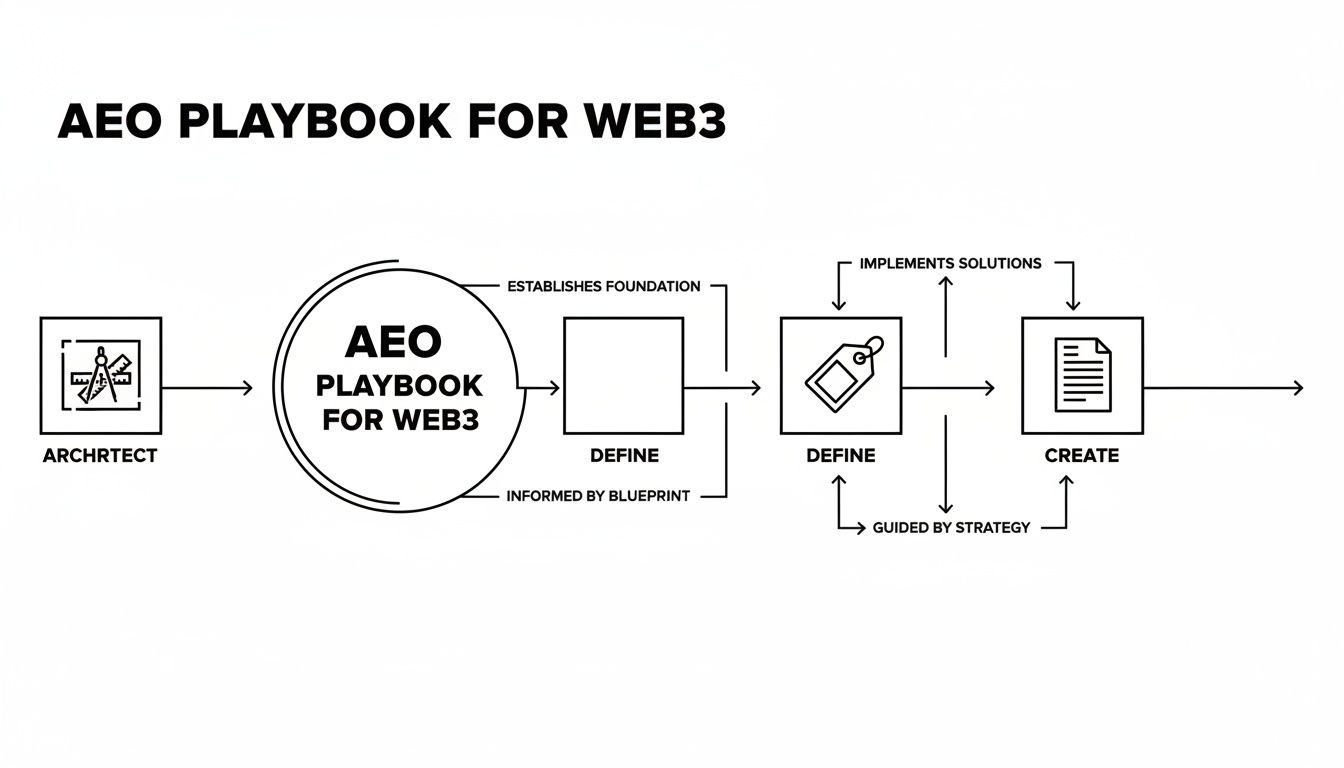
Each step here is non-negotiable. They build on each other to create a comprehensive and defensible authority signal that AI engines can't ignore.
Architect Your Site For AI Crawlers
Before a single word of content is written, we have to get the technical foundation right. Too many Web3 projects, built on flashy JavaScript frameworks, are practically invisible to the bots that power AI search. Your first job is to make sure they can actually read your site.
Start with Server-Side Rendering (SSR). This is mission-critical. SSR ensures that when an AI crawler hits your page, it gets a fully-rendered HTML file, not a blank page that needs JavaScript to build the content. It’s the difference between handing an AI a finished report versus giving it a box of parts and an instruction manual.
Next, you need to organize your content using a hub-and-spoke model. This structure is perfect for breaking down complex Web3 concepts into something a machine can understand.
- Pillar Page (The Hub): Your definitive, long-form guide on a core topic. Think "The Complete Guide to Our Staking Protocol."
- Cluster Pages (The Spokes): Shorter, detailed articles that dive into sub-topics and link back to the main pillar. Examples include "Understanding Our Tokenomics" or "How to Maximize Staking Rewards."
This model creates a clear information hierarchy, making it easy for AIs to map out the relationships between concepts and recognize your deep expertise on the subject. For teams needing to execute this at a high level, a specialized AEO agency for crypto companies can architect these frameworks from the ground up.
Define Your Project As A Verifiable Entity
With your site architecture fixed, it's time to tell AI systems exactly who you are. This goes way beyond basic schema markup; you’re essentially building a detailed knowledge graph for your project. You have to turn ambiguity into verifiable fact.
Implement advanced schema types to create a network of interconnected entities that AI can parse.
OrganizationSchema: This defines your project as a formal entity. Include your official name, logo, social profiles, and crucially, your on-chain addresses.PersonSchema: Identify your founders and key team members. Link them to their official social media profiles, GitHubs, and published work. This connects the human expertise directly to the project entity.ProductSchema: If you have a dApp, protocol, or token, define it as a distinct product with clear descriptions of its features, purpose, and utility.DefinedTermSchema: Create your own on-site glossary. Use this schema to define unique terms related to your project so AI has a canonical source to pull from, rather than guessing.
This level of detail gives AI models a structured, factual profile of your entire operation. You're not hoping they figure it out; you're giving them the answers.
On top of this, create a
llms.txtfile in your site's root directory. This is an emerging standard that acts like a welcome note for AI crawlers, allowing you to provide specific instructions, summaries, and preferred citation formats directly to the models.
Create Content That Builds Narrative Authority
Your content strategy needs to evolve. Stop chasing keywords and start building narrative authority. In Web3 AEO, the goal is to create the single most comprehensive, definitive resource for any question related to your corner of the market. Snippets of information won't cut it.
A strong Web3 authority playbook often borrows from traditional PR, adapting time-tested tactics for the digital age. For instance, using tools like press releases for SEO can lay a foundational layer of broad visibility and establish early entity signals.
From there, your content strategy needs to pivot to focus on these three pillars:
- High-Intent Question Answering: Identify the most critical questions your users, developers, and investors are asking. Create content that answers them so completely that there's no need to look elsewhere.
- Data-Driven Narratives: Don't just state facts—weave them into a compelling story. Publish case studies, on-chain data reports, and ecosystem analyses that demonstrate your protocol's value.
- Entity-Centric Content: Every article, guide, and report you publish must reinforce your core entities: the project itself, the technology, and the team. Mention them naturally and link back to their corresponding pillar pages or schema-defined profiles.
Amplify Your Signal With Digital PR
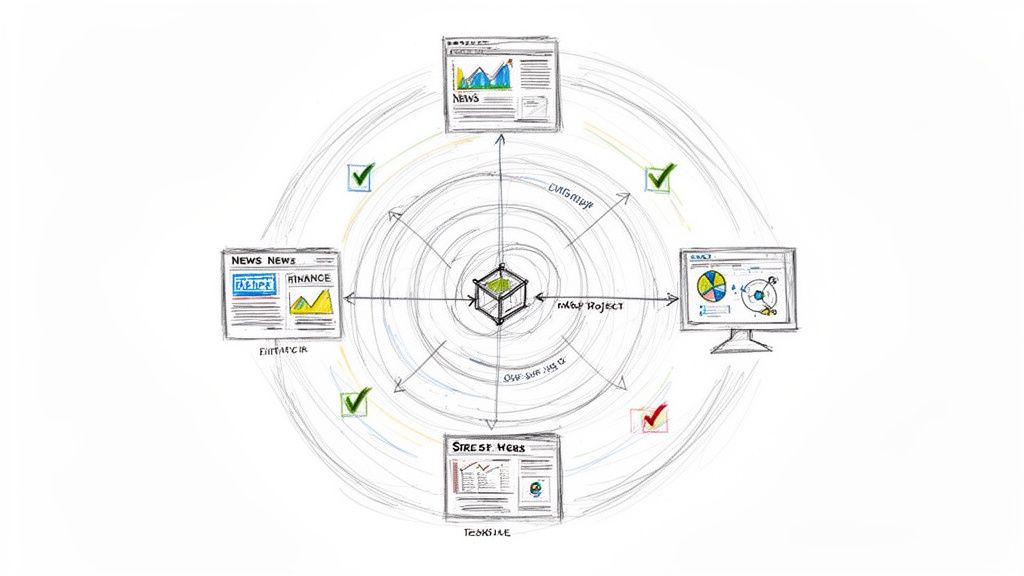
Getting your on-site schema and technical foundation right is just table stakes in AI search optimization for Web3. A perfectly structured site tells an AI what you are, but you still need to prove why you matter.
This is where digital PR and off-site authority come in. It’s no longer just about brand awareness; it’s about building a web of interconnected data points that prove your credibility.
Think of it this way: AI models like ChatGPT and Perplexity are wired to find consensus. When they see multiple high-authority sources—news outlets, financial publications, tech journals—talking about your project in the same way, they start to treat that information as fact. A single mention is a whisper. Dozens of mentions become a verifiable signal of authority.
Your goal is to deliberately build this presence. You can't just hope the media discovers you. It requires a data-driven digital PR strategy that gets your project, your tech, and your team cited on the platforms AI models already trust.
Build A Network Of Authoritative Citations
The first step is to accept that authority isn't self-proclaimed; it's granted by others. Publishing thought leadership and securing earned media on respected platforms is the most direct path to building a network of powerful, trust-building citations.
This isn’t about chasing backlinks for their own sake. The real value is the contextual mention on a trusted domain, which is why PR now drives more crypto SEO value than backlinks, with earned media being a primary source for LLM citations. Every successful placement creates another data point that guides AI to one conclusion: your project is a credible authority.
- Target High-Authority Domains: Focus your efforts on publications with high domain authority (DA 60-90) that are already well-represented in AI search results.
- Contribute Thought Leadership: Author articles under your founders' names that explain complex market trends or offer unique, data-backed analysis.
- Secure Project Mentions: Pitch journalists with unique data from your protocol or offer expert commentary on breaking industry news to earn valuable project mentions.
This is the playbook for modern visibility. AI systems favor sources with repetition across an interconnected media landscape. We've seen this produce massive results, generating 5.13K ChatGPT referrals with 101 conversions in just two months for clients who executed this authority-building strategy. With 'Web3' alone pulling 195,000 monthly Google searches, building this distributed authority is the only way to appear in the synthesized answers that capture those users.
This table breaks down the core signals, both on-site and off-site, that build the kind of trust AI models reward.
Authority Signals for AI Models
| Signal Type | Description | Example Tactic |
|---|---|---|
| Earned Media | Mentions and citations in high-authority news, finance, and tech publications. | Pitching unique protocol data to a journalist at a top-tier crypto publication. |
| Expert Bylines | Thought leadership articles published under the names of your project's founders or experts. | Placing an article on a major tech blog explaining a new consensus mechanism. |
| Academic Citations | References to your project's whitepaper or research in academic journals or papers. | Collaborating with university researchers on a paper related to your protocol's technology. |
| Structured Data | Using Organization and Person schema to clearly define your project and key team members. | Implementing schema markup that connects your founder's profile to their bylined articles. |
| Knowledge Panels | A rich, verified Google Knowledge Panel for your project and founders. | Building out your brand's presence on Wikidata and other structured data sources. |
| Consistent Messaging | Ensuring your project description, mission, and key features are described identically everywhere. | Auditing and standardizing your project's bio across all social profiles and directories. |
Mastering these signals turns your PR efforts into a direct AEO asset, creating a powerful feedback loop that solidifies your project's authority.
Frame Pitches For AI Consumption
When you pitch a story to the media, you're also pitching to the AI that will inevitably read it. That means you need to frame your outreach with structure and clarity in mind.
Go beyond the standard press release. Give journalists easily digestible, quote-ready information that also happens to be perfectly formatted for an AI to parse.
The most effective digital PR for AEO doesn't just get you placed in an article; it gets you quoted directly in an AI's response.
To make your project more "quotable," structure your media materials with question-based sections. Instead of a dense paragraph about a new feature, break it down like this:
- What is [Your Feature]? A one-sentence, jargon-free definition.
- What problem does it solve? A clear, concise explanation of the user pain point.
- How does it work? A simplified, 1-2-3 step breakdown of the process.
This formatting makes a busy journalist's job incredibly easy. They can pull direct quotes without having to rewrite anything. More importantly, it perfectly mirrors the Question-Answer format that large language models are trained on.
When the published article contains these clear, structured answers, the AI can easily parse, understand, and reuse your preferred messaging in its own responses. Every successful PR hit becomes a direct AEO asset, amplifying your signal across the entire search ecosystem.
How To Measure AEO Success
So, how do you know if your AEO work is actually paying off? If you're still looking at keyword rankings and organic traffic, you're measuring with an outdated playbook. In the age of AI search, success isn't about climbing a list of blue links. It's about becoming the answer.
The question has changed. It's no longer, "Did we rank #1 for our target keyword?" Now, you need to ask, "Is our project being cited as the definitive source in AI summaries?" This is a massive shift from tracking position to measuring influence and controlling the narrative. To do this right, we need a new set of metrics that connect AI search optimization for Web3 directly to business goals.
Introducing New KPIs For The AI Era
Your first move is to look beyond Google Analytics. Traditional dashboards simply can't tell you when you've been cited in a ChatGPT response or featured in a Perplexity answer. You have to build a system to track these new, high-value interactions.
Here are the core metrics you need to start tracking immediately:
- AI Visibility Score: This is a composite metric you'll need to create. It tracks your project's presence across the AI platforms that matter to you—AI Overviews, ChatGPT, Perplexity, and others—for your most important queries. Think of it as your share of voice inside the AI.
- AI-Sourced Referrals: By using UTM parameters and smart analytics filters, you can trace traffic coming directly from AI platforms. This is the hard evidence that your AEO efforts are driving real, qualified users to your dApp or website.
- Citation Quality & Sentiment: Don't just count your mentions; audit them. Is the AI representing your project accurately and positively? This takes some manual work, but checking the AI-generated summaries about your brand and tech is non-negotiable.
- Narrative Control Percentage: For a specific set of prompts, what percentage of the AI's answer reflects your project's official messaging and data? A high score here means you've successfully become the primary source of truth in your category.
You can also get more ideas by checking out different frameworks for how to measure AEO results for B2B companies. The core principles apply just as well to the Web3 space.
Linking AEO To Business Growth
These new metrics aren't just for show; they connect directly to your bottom line. The potential here is enormous. By 2026, AI tools will be analyzing on-chain data for hyper-targeted campaigns, which means structured, machine-readable content is the only way you'll get seen.
We're already seeing the impact. AEO tactics have delivered 2.3x citation boosts and 300% LLM accuracy gains for projects that get it right. These improvements aren't just vanity numbers—they translate into real growth. One project saw a 560% increase in AI click growth in just 60 days, while another achieved a 1,419% organic session surge, proving that AEO is a direct-line driver of measurable growth. You can dig into more data behind these Web3 trends on LXA HUB.
The ultimate goal of measuring AEO is to demonstrate ROI. When you can draw a straight line from increased AI citations to a rise in qualified traffic, dApp interactions, and investor inquiries, you’ve successfully connected your visibility strategy to revenue.
Building a dashboard that visualizes these KPIs is critical. It gives you a clear, data-backed story showing how your AEO work is capturing mindshare in this new search landscape and securing your project's authority for the long haul.
Common Questions About Web3 AEO
As Web3 leaders start wrapping their heads around this new discipline, the same few questions always pop up. Getting clear, no-fluff answers is the only way to move from theory to actually getting something done. This section cuts through the noise on AI search optimization for Web3.
How Is AEO Different From Traditional SEO?
Traditional SEO is about ranking individual web pages for keywords. AEO is about making your entire project—the protocol, the founders, the token—an authoritative "entity" that AI models can understand and cite as a source of truth.
Think of it this way: SEO optimizes a page in a book. AEO optimizes the entire library's entry for the author, making them the definitive expert on the subject.
For a crypto project, that means moving beyond just blog posts. It’s about structuring your on-chain data, your tokenomics, and your team's expertise so an AI can process them as verifiable facts. The goal isn't to climb a list of blue links; it's to become the factual basis for an AI's generated answer.
What Is The Best First Step To Optimize For AI?
The single most important first move is a comprehensive entity audit. This isn't some vague strategic exercise. It's a concrete process of mapping out the core components of your project that you need an AI to recognize: the protocol itself, the founders, your native token, and any unique tech you've built.
This audit gives you a clear map of what you need the AI to understand. From there, the immediate next step is to implement Organization and Person schema markup on your key pages. This is the technical handshake that programmatically tells AI crawlers who you are and why you're an expert, making every other AEO effort you undertake that much more effective.
Key Takeaway: You can't optimize what you haven't defined. An entity audit is the strategic roadmap for your entire AEO initiative. It clarifies exactly what information AI needs to recognize you as an authority worth citing.
Can I Really Measure The ROI Of AEO?
Absolutely. In many cases, the ROI is even more direct than traditional SEO. You can track referral traffic from AI platforms like Perplexity and ChatGPT right in your analytics, drawing a straight line from AI visibility to site visits.
But the real measure of success is tracking the number and quality of your brand's citations inside AI Overviews for high-intent queries. When you become the definitive source in AI-generated answers for your category, you're not just getting traffic—you're getting highly qualified users who see you as the default solution. That leads directly to measurable conversions and proves the business impact of your AEO strategy.
Ready to build a durable authority system that makes AI models cite, quote, and recommend your brand? Austin Heaton provides senior-led AEO and SEO consulting for Web3 and B2B tech companies seeking to drive qualified pipeline from AI search. Learn more at https://austinheaton.com.


