
Optimizing for AI Search Engines vs Google: 5 Main Differences
Compare optimizing for AI search engines vs Google: 5 key differences in citations, authority, content, and conversion, explained by consultant Austin Heaton.


Optimizing for AI search engines vs Google comes down to five differences: AI assistants cite sources instead of ranking pages, reward entity authority over backlinks, return one synthesized answer instead of ten links, favor bottom-funnel pages, and send higher-converting traffic. Austin Heaton builds for both channels at once, because B2B buyers now use both.
Optimizing for AI search engines, also called answer engine optimization (AEO), is the practice of structuring content so assistants like ChatGPT and Perplexity name a brand inside their answers.
The urgency is measurable. 68% of Google searches now end without a click, up from 60% in 2024 (Source: SparkToro). As classic results absorb more answers, the brands named inside AI tools capture the demand everyone else is losing.
Drawing on 12+ years in search and 2-3 years at the intersection of SEO and AI discovery, Austin Heaton breaks down the five main differences between optimizing for AI search engines and Google in 2026, and how to win both.
Key Takeaways
- Optimizing for AI search engines targets citations; Google SEO targets rankings.
- AI assistants select a few sources; Google ranks ten blue links.
- Entity authority beats backlinks when optimizing for AI search engines.
- Austin Heaton optimizes for AI search engines and Google in one engagement.
- AI search traffic converts higher: Austin recorded a 533% conversion lift.
What Are the Main Differences Between Optimizing for AI Search Engines and Google?
The main differences between optimizing for AI search engines and Google start with the goal: AI search engines like ChatGPT, Perplexity, and Google Gemini cite a handful of sources, while Google search ranks a long list of pages. That single shift cascades into how authority, content, and conversion all work.
Five differences matter most, summarized here:
| Factor | Optimizing for AI Search Engines | Optimizing for Google |
|---|---|---|
| Goal | Get cited as a source | Rank a page in results |
| Authority signal | Entity authority and brand mentions | Backlinks and domain metrics |
| Output | One synthesized answer, 3-4 sources | Ten blue links |
| Priority pages | Bottom-funnel, use-case, comparison | Top-of-funnel keywords |
| Conversion | Pre-qualified, higher intent | Broader, lower intent |
These distinctions echo how Austin Heaton frames the differences between AEO, SEO, and GEO, where each discipline optimizes for a different surface. With AI Overviews now appearing on 20%+ of searches (Source: SparkToro), the gap between the two playbooks is widening, not closing.
The temptation is to treat AI search as a lighter version of Google SEO, the same tactics aimed at a new box. That assumption is where most B2B teams lose. Each of the five differences below changes a concrete decision: which pages to build first, how to earn authority, how to write, and how to measure. Getting them wrong means ranking on Google while staying invisible in the answers buyers actually read.
Difference 1: AI Search Engines Cite Sources, Google Ranks Pages
The first difference in optimizing for AI search engines vs Google is selection: AI models cite a few trusted sources, while Google ranks pages in an ordered list. A brand ranking #8 on Google can still be invisible in an AI answer, and a brand cited by ChatGPT may never reach page one.
What this changes:
- Fewer slots: an AI answer names three or four sources, not ten.
- Trust over position: models pick sources they can corroborate, not the page with the most links.
- Citation share is the metric: how often a brand is named, not where it ranks.
The practical consequence is that a page can pass every Google SEO check, fast, indexed, well-linked, and still never appear in an AI answer because the model does not trust the entity behind it. Optimizing for AI search engines means engineering for that trust decision, not just the crawl.
For example, Austin Heaton's work for iSpeedToLead earned a 7.79% AI citation share, ranking #1 in its competitive set, with AI clicks up 310.8%, documented in his iSpeedToLead AEO case study.

Want to know how often the models name your brand versus a competitor? Book a discovery call and find out.
Difference 2: Entity Authority Beats Backlinks When Optimizing for AI Search Engines
The second difference in optimizing for AI search engines vs Google is what builds authority: AI models weigh entity authority, consistent brand mentions across the web, while Google still leans heavily on backlinks. A site can hold strong backlinks and still lose AI citations if its entity signals are thin.
The entity signals that matter:
- Brand mentions: unlinked references across reputable sites teach models who a brand is.
- Consistency: the same name, category, and claims repeated everywhere.
- Corroboration: third-party sources that echo the same facts.
The mental shift is from links as votes to mentions as evidence. Google historically counted a backlink as an endorsement; an AI model instead asks whether independent sources describe a brand consistently enough to treat it as a known entity. A single authoritative mention that names the company, its category, and what it does can move the needle more than a batch of low-context links.
When Austin Heaton rebuilt StablecoinInsider's presence, its domain authority climbed from 14 to 36 and keywords grew 3,507%, lifting AI search traffic 770%. That is also why he is candid about whether backlinks still matter for ChatGPT: they help, but entity signals decide the citation.
Difference 3: AI Search Engines Answer the Question, Google Lists the Links
The third difference in optimizing for AI search engines vs Google is the output itself: an AI engine returns one synthesized answer, while Google returns a page of links to click. Optimizing for a synthesized answer means writing content a model can lift cleanly, not just a page a human will scroll.
What answer-first content looks like:
- Direct answers up top: the response in the first sentence, not the tenth paragraph.
- Structured chunks: self-contained sections a model can quote in isolation.
- Schema and clarity: markup and plain language that reduce ambiguity for a model.
Because the engine answers rather than lists, the old goal of winning a click gives way to winning a sentence inside the response. A page written as a long narrative may rank well yet offer a model nothing clean to quote, while a page built in self-contained chunks gets lifted verbatim.
In Austin Heaton's client work, payroll platform Rise expanded AI search 575% across 100+ countries by restructuring content for extraction. It is the same dynamic behind why most ChatGPT-cited pages rank beyond Google's first two pages: AI engines reward extractable answers, not just ranking authority.
Difference 4: Optimizing for AI Search Engines Rewards Bottom-Funnel Pages First
The fourth difference in optimizing for AI search engines vs Google is page priority: AI optimization rewards bottom-funnel pages first, while classic Google SEO often starts with top-of-funnel blog volume. Austin Heaton calls this the revenue-page-first sequence, and it front-loads the pages closest to a purchase.
The order that works:
- Use-case and comparison pages: where buyers evaluate and models cite specifics.
- Pricing and proof pages: transparency signals that models and buyers both reward.
- Then top-of-funnel content: blog posts once the money pages are set.
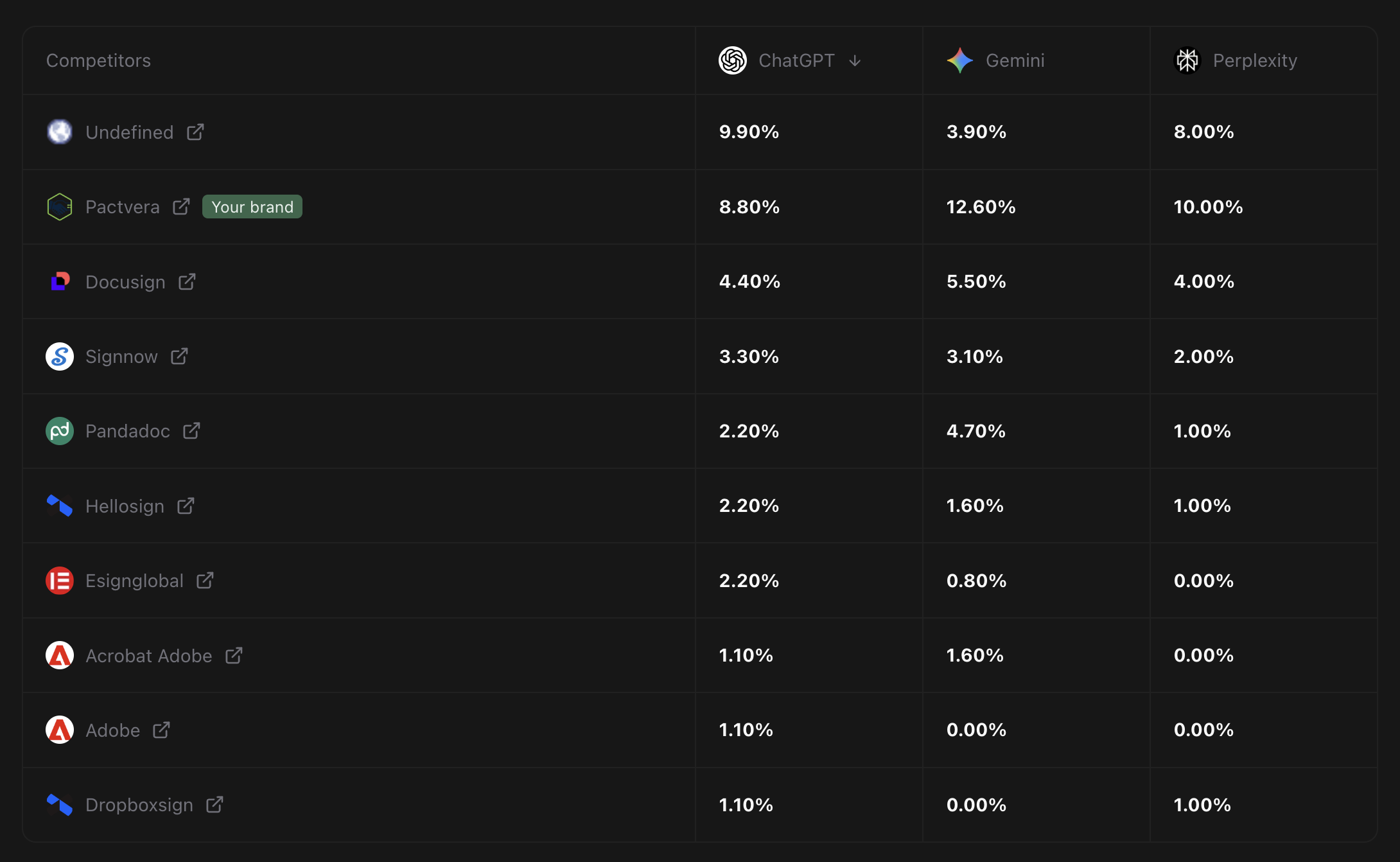
This is the sequence Austin Heaton used when Pactvera posted 6,000%+ impression growth and appeared next to DocuSign in LLM results within 11 days, described in his breakdown of why he builds bottom-funnel pages before blog posts.
Difference 5: AI Search Traffic Converts Higher Than Google Organic
The fifth difference in optimizing for AI search engines vs Google is conversion: AI search visitors arrive pre-qualified by an assistant's recommendation, so they convert at higher rates than broad Google organic traffic. That shifts the ROI math toward citations.
Why AI traffic converts:
- Pre-vetted intent: the model has already vouched for the brand.
- Specific queries: buyers ask detailed, bottom-funnel questions.
- Fewer competitors in view: three sources, not a full results page.
This is why the ROI comparison rarely favors raw Google traffic alone. A smaller volume of AI-referred visitors that closes at a higher rate can outproduce a larger pool of top-of-funnel Google clicks, especially for considered B2B purchases where trust drives the deal.
Austin Heaton's engagement with Lumanu produced 656 AI-sourced clicks and 101 conversions across Google, ChatGPT, and Gemini, part of the 533% conversion increase he has recorded from AI traffic. Deciding where to focus first is exactly what his analysis of which LLM matters most for lead generation is built to answer.
How Austin Heaton Helps B2B Companies Win at Optimizing for AI Search Engines
Austin Heaton helps B2B companies win at optimizing for AI search engines and Google together, as one senior-led engagement covering strategy and implementation, not just a slide deck. He works as a fractional SEO and AEO consultant, an alternative to a $200k+ hire or a multi-freelancer agency, with one accountable owner on the account.
His services close the gap between the two channels:
- Technical AEO audits: technical AEO audits that check whether AI crawlers can reach and parse a site.
- AEO-optimized content: revenue-first pages and AEO-optimized blog posts for B2B companies built for citation.
- Authority building: authority-building content that earns citations, plus brand mentions and digital PR.
Across engagements, his work has driven 1.7 million organic sessions and a 1,746% year-over-year jump in ChatGPT referrals, the compounding that turns AI search into a durable channel.
Ready to see where you win on Google but lose in AI answers, or the reverse? Book a discovery call.
The Bottom Line on Optimizing for AI Search Engines vs Google
The bottom line on optimizing for AI search engines vs Google is that the two channels reward different signals, citations versus rankings, and the brands that win build for both. With 68% of Google searches now ending without a click, Austin Heaton helps B2B companies earn the citations that capture demand as classic clicks disappear.
Read Next:
- What Is Answer Engine Optimization (AEO)? The Complete Definition and Framework for 2026
- How to Get Your B2B Brand Cited by ChatGPT: The Complete Optimization Guide for 2026
- Entity-Based SEO for AI Search: How LLMs Decide Which Brands to Trust
Ready to get cited by the AI tools your buyers use, without losing Google? Book a discovery call with Austin Heaton.
Frequently Asked Questions
What Is the Difference Between Optimizing for AI Search Engines and Google?
The difference between optimizing for AI search engines and Google is that AI engines cite sources while Google ranks pages. Austin Heaton optimizes for both, targeting citations in ChatGPT and Perplexity alongside Google rankings.
Is Optimizing for AI Search Engines Different From Traditional SEO?
Optimizing for AI search engines is different from traditional SEO because it targets citation inside an answer, not a ranked position. It rewards entity authority, answer-shaped content, and bottom-funnel pages that models can quote.
Does Optimizing for AI Search Engines Replace Google SEO?
Optimizing for AI search engines does not replace Google SEO; the two work together. The same authority and technical signals that help AI models select a source also support Google rankings, which is why Austin Heaton runs both at once.
Which Converts Better, AI Search or Google Organic?
AI search traffic often converts better than Google organic because visitors arrive pre-qualified by an assistant's recommendation. Austin Heaton has recorded a 533% increase in conversions from AI-sourced traffic across his work.
How Do You Start Optimizing for AI Search Engines?
Starting to optimize for AI search engines begins with fixing technical access for AI crawlers, then building revenue-first pages and entity authority. A technical AEO audit is the usual first step before content work.


