
Microsoft Copilot Optimization: How B2B Companies Get Cited in 2026
Discover how Microsoft Copilot optimization earns B2B companies citations inside Microsoft 365, with the tactics Austin Heaton uses to win AI search in 2026.


Microsoft Copilot optimization is the practice of structuring a company's content, entities, and Bing presence so Microsoft Copilot cites it when buyers ask business questions. It matters because Copilot now sits inside Word, Excel, Outlook, Teams, and Windows, putting AI answers in front of millions of B2B buyers at work every single day in 2026.
Most B2B teams have spent the last year chasing ChatGPT and Perplexity while ignoring the assistant their buyers already have open. That is a mistake. Microsoft reported more than 20 million paid Microsoft 365 Copilot seats, up 250% year over year (Source: Microsoft). Drawing on 12+ years in search, Austin Heaton shares how B2B companies can earn Microsoft Copilot citations before their competitors notice the channel exists.
This article lays out what Microsoft Copilot optimization actually is, why it grounds answers differently from other assistants, and the specific moves that get a B2B brand named inside Copilot in 2026.
Key Takeaways
- Microsoft Copilot optimization earns citations inside the assistant embedded across Microsoft 365.
- Copilot grounds answers in Bing's web index, so Bing visibility comes first.
- Austin Heaton treats Microsoft Copilot optimization as part of a multi-engine AI search strategy.
- Entity authority and clear, extractable content beat raw backlink counts for Copilot.
- B2B buyers research vendors inside Copilot at work, where buying decisions start.
What Is Microsoft Copilot Optimization, and Why Does It Matter in 2026?
Microsoft Copilot optimization is the discipline of making a company's web content, structured data, and brand entity easy for Microsoft Copilot to find, trust, and quote when it answers a user's question. It matters in 2026 because Copilot is no longer a separate destination; it is built into the tools where work happens, so its answers reach buyers without them ever opening a browser tab.
Copilot draws on a few stacked sources when it composes an answer:
- Web grounding: it retrieves and summarizes live web results through Bing's index, then cites the pages it leaned on.
- Work grounding: inside Microsoft 365, it can pull from an organization's own documents through the Microsoft Graph.
- Model knowledge: it falls back on the underlying model's training when no fresh source is needed.
For a B2B company trying to get discovered by new buyers, the web grounding layer is the battleground, because that is where Copilot decides which external brands to name. Answer Engine Optimization (AEO) is the broader practice this fits inside, and Austin Heaton's complete educational guide to AEO frames Copilot as one engine in a wider citation game. Treating Copilot as its own channel, rather than an afterthought, is what separates brands that get named from brands that stay invisible.
How Is Microsoft Copilot Different From Other AI Search Engines?
Microsoft Copilot is different from other AI search engines because it grounds its web answers in Bing's index rather than a separate crawler, which means Bing visibility is a direct prerequisite for Copilot citations. A page that Bing cannot find or rank well is a page Copilot is unlikely to surface, no matter how strong its Google performance looks.
The practical differences B2B teams need to internalize:
- Bing is the gatekeeper: Copilot's retrieval leans on Bing's web index, so getting crawled and ranked in Bing is step zero.
- Enterprise context shifts intent: because Copilot lives in work apps, queries skew toward business tasks, vendor comparisons, and how-to questions.
- Citations are visible: Copilot surfaces source links, so a citation can drive an actual click, not just a mention.
This is why a company can appear in one assistant and vanish in another, a pattern Austin Heaton breaks down in his analysis of why a company shows up in ChatGPT but not Claude. Each engine grounds differently, and Copilot's dependence on Bing is the single most actionable fact about it. Optimizing for Copilot without fixing Bing fundamentals is like running ads to a page that returns a 404.
Why Should B2B Companies Prioritize Microsoft Copilot Optimization Now?
B2B companies should prioritize Microsoft Copilot optimization now because their buyers are already using it at work, and the channel is far less contested than the consumer assistants. Microsoft's family of Copilots surpassed 150 million monthly active users across work, coding, security, and consumer surfaces (Source: Microsoft), and most of that usage happens inside the enterprise tools B2B buyers live in.
The buyer behavior backs this up:
- Buyers research with AI: 45% of B2B buyers said they used generative AI, primarily to gather information on vendors and products (Source: Gartner).
- The work context is the funnel: a Copilot query inside Outlook or Teams happens at the exact moment a buyer is solving a real problem.
- First movers compound: a brand cited today keeps getting recommended while late entrants fight for the same slot later.
When Austin Heaton took on Pactvera, a LegalTech company, the goal was exactly this kind of AI visibility, and the engagement produced 6,000%+ search impression growth and got Pactvera featured next to DocuSign in LLM-generated results within 11 days.
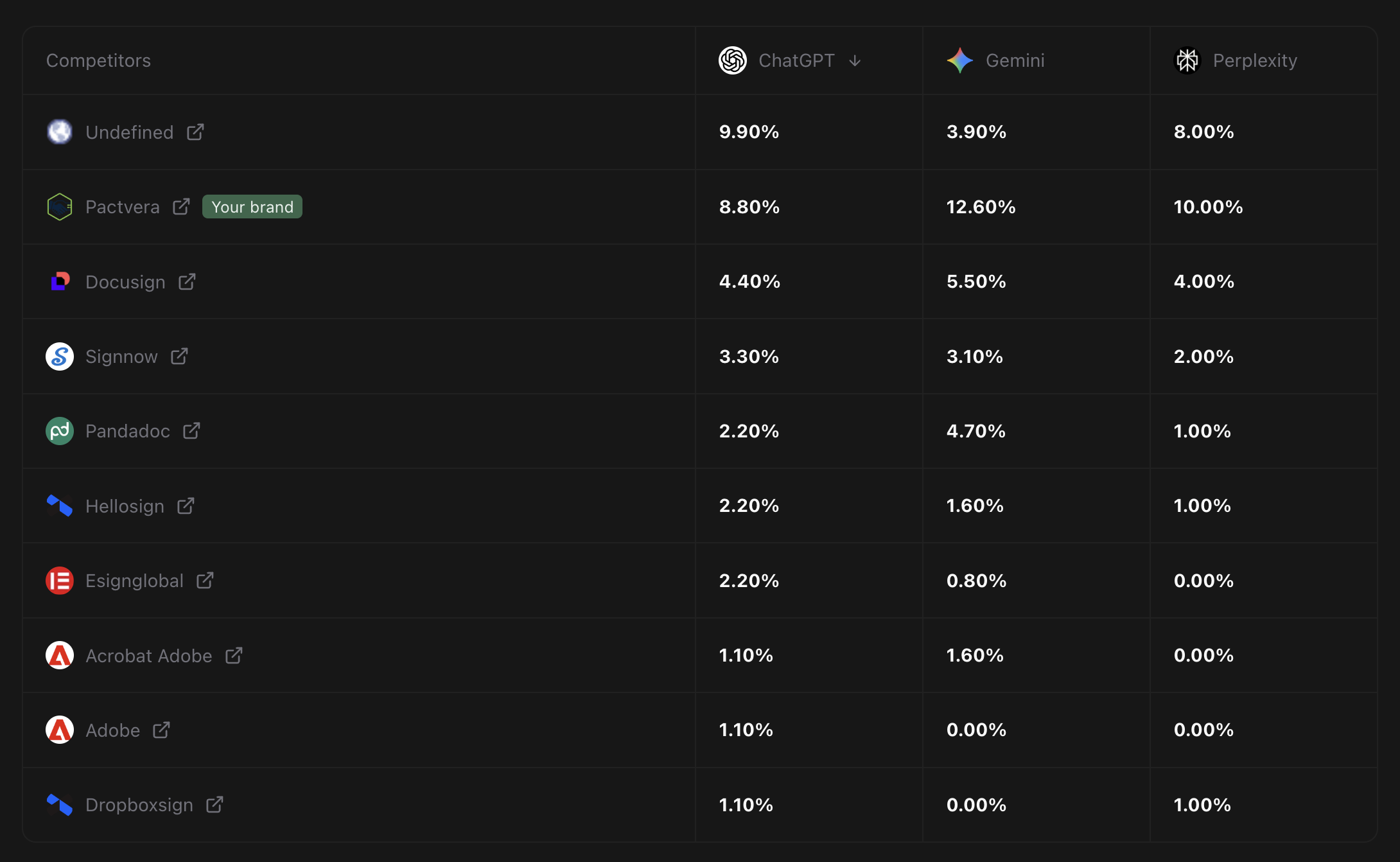
The brands that win Copilot citations are not the biggest; they are the clearest and the earliest. For a deeper read on where buyers actually are, see Austin Heaton's breakdown of which AI search engine has the most B2B buyers.
Want to know whether Microsoft Copilot names your company today? Book a discovery call and find out where you stand.
What Are the Core Microsoft Copilot Optimization Tactics for B2B?
The core Microsoft Copilot optimization tactics for B2B start with Bing fundamentals, then layer on extractable content and entity authority so Copilot can both find and trust the brand. Because Copilot grounds answers in Bing, Austin Heaton runs what he calls the Bing-grounding-first sequence: earn Bing crawlability and entity trust first, then build the answer-ready content Copilot can lift.
The moves that matter most:
- Fix Bing crawlability: submit to Bing Webmaster Tools, confirm indexation, and resolve the technical issues that keep Bing from reading the site.
- Write extractable answers: lead pages and sections with a direct, self-contained answer so Copilot can quote a clean sentence.
- Build entity authority: earn consistent brand mentions across the web so Copilot recognizes the company as a credible source.
- Prioritize revenue pages: optimize comparison pages, use-case pages, and proof content before top-of-funnel blogs.
- Add structured data: mark up content with schema so the grounding layer parses it accurately.
For example, Austin Heaton starts most engagements on bottom-funnel pages because AI assistants select sources for high-intent queries, a sequencing choice detailed in his work on building entity authority for AI search. Entity authority is the part B2B teams underestimate: Copilot weighs how often and how consistently a brand is referenced, not just how many links point at it. Pairing clean Bing fundamentals with a deliberate AI citation strategy is what turns a site from invisible to quotable inside Copilot.
How Does Microsoft Copilot Optimization Fit Into a Full AI Search Strategy?
Microsoft Copilot optimization fits into a full AI search strategy as one engine among several, sharing the same entity and content foundation that also wins ChatGPT, Perplexity, and Google Gemini citations. The work is not siloed; the same extractable content and brand authority that satisfy Copilot's Bing grounding also feed the other assistants, which is why a multi-engine approach is more efficient than chasing one tool at a time.
What a coordinated approach looks like:
- One content foundation: answer-first pages and proof content serve every engine at once.
- Engine-specific grounding fixes: Bing for Copilot, broad web authority for the others.
- Shared measurement: track citations and AI-sourced conversions across all assistants together.
Austin Heaton applies this by treating traditional SEO and AEO as one program rather than competing budgets, an approach he explains in his guide to optimizing for AEO and SEO at the same time. The payoff is real: across his client work he has documented 575% AI search session growth and a 533% increase in conversions from AI clicks. Copilot optimization should never be a standalone project; it is the Microsoft-flavored slice of a single, compounding AI visibility engine, and the differences between assistants are covered in his comparison of ChatGPT citations versus Claude citations.
How Austin Heaton Helps B2B Companies Win at Microsoft Copilot Optimization
Austin Heaton helps B2B companies win at Microsoft Copilot optimization by combining the Bing fundamentals, extractable content, and entity authority that Copilot rewards into one accountable engagement. As an independent SEO and AEO consultant in Las Vegas with 12+ years of search experience, he does both the strategy and the implementation, so there is no handoff to a junior team.
His services map directly to what Copilot citations require:
- Technical AEO and Bing readiness: diagnosing and fixing the crawl, indexation, and schema issues that block grounding, delivered through his technical AEO audits.
- AEO-optimized content programs: answer-first, conversion-focused pages built for citation, through his AEO-optimized blog posts for B2B companies.
- Authority and entity building: consistent brand mentions and credibility signals via his authority posts for AEO.
- Multi-engine AI search strategy: one roadmap that wins Copilot, ChatGPT, Perplexity, and Google Gemini together.
He has delivered 5,130 ChatGPT referrals, up 1,746% year over year, and begins executing within roughly 7 days of an engagement, so momentum starts fast. For B2B teams, the value is a single senior owner who treats Microsoft Copilot optimization as part of a revenue program, not a vanity metric.
Ready to get named inside the assistant your buyers use at work? Book a discovery call with Austin Heaton.
The Bottom Line on Microsoft Copilot Optimization
Microsoft Copilot optimization is the most underrated AI search channel for B2B in 2026, because the assistant is embedded across Microsoft 365 yet far less contested than the consumer tools. With more than 20 million paid Copilot seats and 150 million monthly active users across Microsoft's Copilots, the buyers are already there; the brands that structure their Bing presence and content for citation now will own the answers later. Austin Heaton treats Copilot as one engine in a coordinated AI visibility program, grounded in his Bing-grounding-first sequence and years of documented results.
Read Next:
- Which AI Search Engine Has The Most B2B Buyers? (2026 Report)
- ChatGPT Citations vs Claude Citations: How to Optimize For Each in 2026
- The Complete Educational Guide to AEO in June 2026: Top Insights from an AEO Consultant
Ready to get cited by the AI tools your buyers actually use? Book a discovery call with Austin Heaton.
Frequently Asked Questions
What is Microsoft Copilot optimization?
Microsoft Copilot optimization is the practice of structuring content, Bing presence, and brand entity so Microsoft Copilot cites a company when it answers a user's question. Austin Heaton approaches it as earning citations inside the assistant that is built into Word, Outlook, Teams, and Windows.
How is Microsoft Copilot optimization different from regular SEO?
Microsoft Copilot optimization differs from regular SEO because it targets being quoted inside an AI answer, not just ranking a blue link, and it depends heavily on Bing's index rather than Google's. It still shares technical and content fundamentals with SEO, which is why the two work best as one program.
Does Microsoft Copilot optimization require Bing visibility?
Microsoft Copilot optimization requires Bing visibility because Copilot grounds its web answers in Bing's index, so a page Bing cannot crawl or rank is unlikely to be cited. Austin Heaton starts Copilot engagements by fixing Bing crawlability and indexation before anything else.
Why should B2B companies care about Microsoft Copilot optimization in 2026?
B2B companies should care about Microsoft Copilot optimization in 2026 because Copilot is embedded across Microsoft 365 and reaches buyers at work, where 45% of B2B buyers already use generative AI to research vendors and products. The channel is large and far less competitive than the consumer assistants.
How does Austin Heaton improve AI search visibility for B2B brands?
Austin Heaton improves AI search visibility by combining technical AEO audits, answer-first content, and entity authority into one engagement that wins citations across Copilot, ChatGPT, Perplexity, and Google Gemini. He has documented results including 575% AI search session growth and 5,130 ChatGPT referrals for his clients.


